
Count how many full-height strips your wall or room needs, then work out how many you can cut from one roll after allowing for trimming and pattern matching. Divide strips needed by strips per roll and round up. For rooms with different wall heights or designs with an offset match, sketch out your cuts before you order.
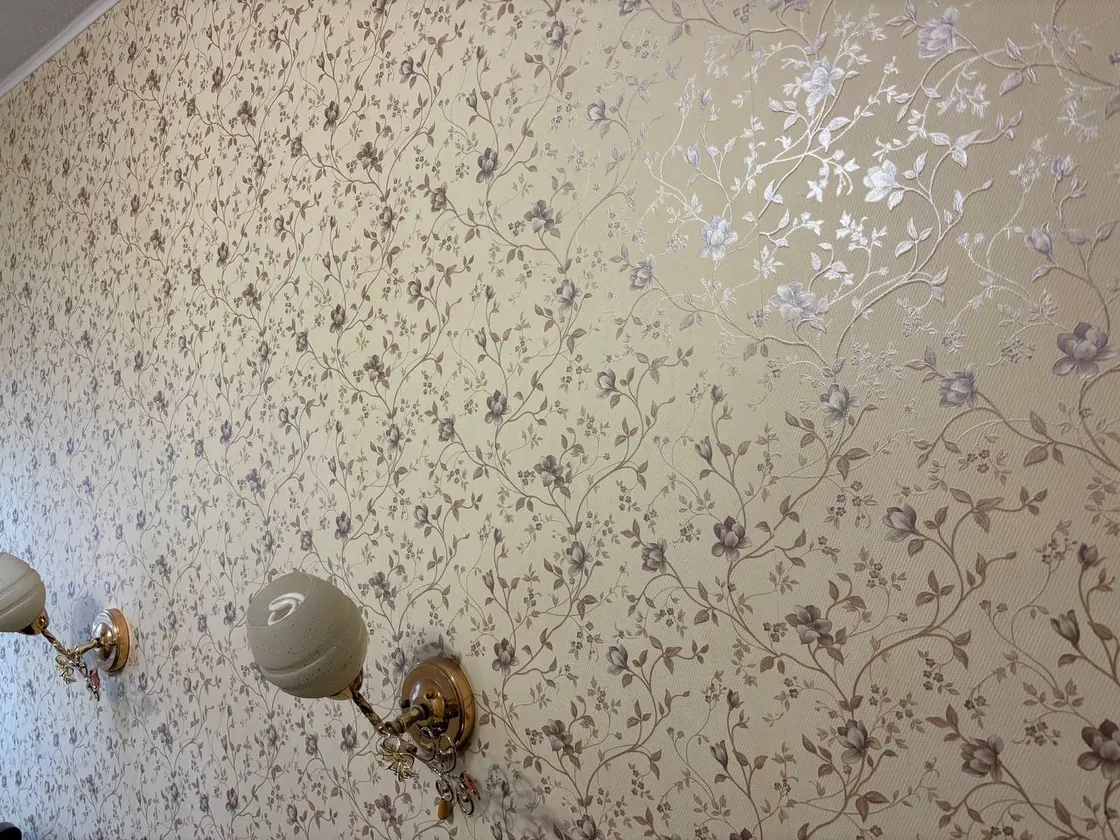
To figure out how much wallpaper you need, start with two sets of measurements. For each wall, write down its width and height. For the product you’re considering, note the usable width, length per continuous roll, match type, and vertical pattern repeat, if listed. Look under Specifications, Dimensions, or Installation on the product page. Check the hanging instructions for trim allowances plus any overlap or edge trimming that changes how much width each strip covers.
Write feet and inches as measured, then convert everything to inches before dividing. Use square feet when comparing coverage on product labels. If you’re choosing between two prints, calculate how much wallpaper is needed for each one separately. Two products with identical dimensions can give you different numbers of usable strips.
How to Measure Your Walls Before You Order
For one wall, measure its width from edge to edge. Check the height near both ends and midway across, from baseboard to ceiling or crown molding. If you’re papering above a chair rail or wainscoting, measure up from that trim. If the readings vary slightly, use the tallest measurement for all full-height cuts on that wall. Under a sloped ceiling, jot down heights at the planned strip positions so you can see where shorter cuts might work.
For a whole room, sketch each wall separately and label its width and height. Include any alcove or bump-out you plan to paper. Mark inside and outside corners, along with anything that changes where a strip starts or ends. Even in a rectangular room, measuring each wall gives you enough information to plan seams around corners and deal with a ceiling that rises or dips.
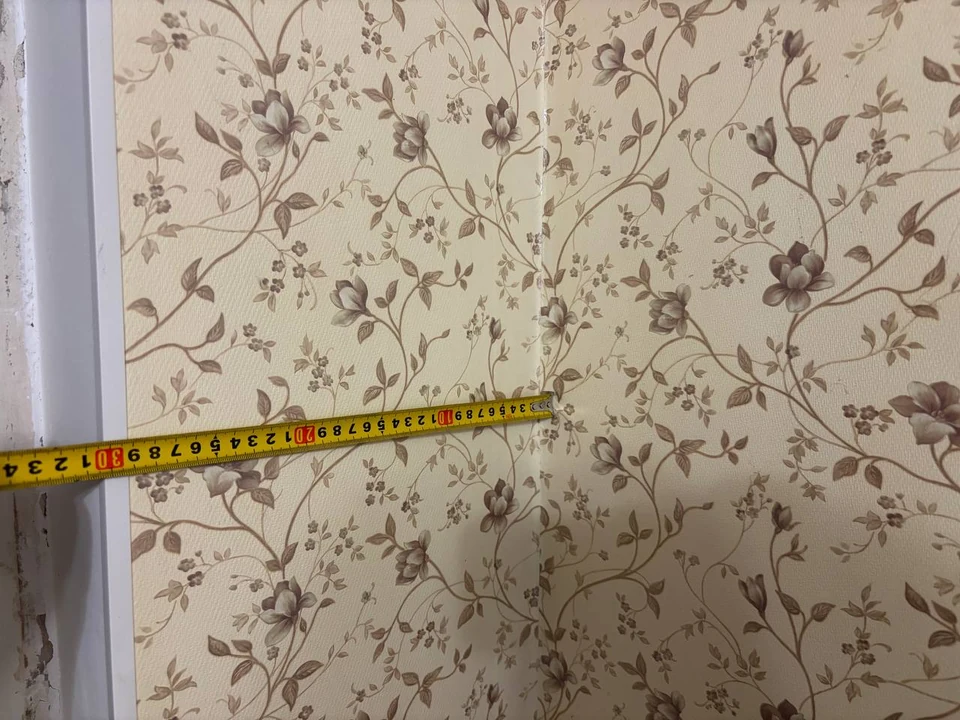
Measure windows and doors from trim edge to trim edge. Mark their positions on your sketch. Record wall heights above and below each window and above each door frame. Keep those measurements next to your proposed seams. A strip that runs beside a window and extends over part of its frame may still need a full-height cut, even though much of that piece gets trimmed away.
Where an opening spans an entire strip position, you may only need short pieces above or below it. Count an offcut toward that spot once you know it’s wide enough, tall enough for trimming, and has a print that lines up with its neighbors. Until you can assign those pieces on your sketch, keep those positions in your estimate as full-height strips. Subtracting every opening in square feet can leave you short even when your area estimate looks right on paper.
How to Calculate How Much Wallpaper You Need
1. Count strip positions on each wall
Divide each wall’s width by the product’s usable width and round up to a whole strip. A narrow gap at one edge still takes material. For a basic room estimate, add the wall-by-wall counts. If you plan to center a motif, move seams away from window frames, or wrap an outside corner, mark your starting seam and count positions again using that layout. Follow the product’s directions for corners. Before counting a leftover piece toward an adjoining wall, check its width and how its edges will meet the next strip.
2. Set your cut length
Add the product’s top and bottom trim allowances to the measured height. Keep fractions of an inch as you go. For random match, that sum is the cut length. For straight match, divide the height with trim by one vertical repeat. Round up to a whole number of repeats, then multiply by repeat length. With those equal-length cuts, successive pieces can start at identical points in the design. If the first cut must start at a particular part of a print, budget for any material you’ll skip at each roll’s start. Follow the manufacturer’s cutting directions for offset designs.
3. Work out how many complete strips fit
Subtract any initial alignment waste from the continuous roll length. Divide what’s left by the planned cut length and round down. A result of 3.9 gives you three complete strips. If you get less than one, check your dimensions. You may need a longer product or a layout with less height to cover. Keep track of leftovers so you can check them against openings or shorter walls.
4. Round your order up
For strips with matching cut lengths and alignment requirements, add up how many you need. Divide by the number of full strips per roll and round up. If heights vary, list which pieces you’ll cut from each roll. Check whether you can fit shorter pieces into any leftover lengths and still line up their patterns. When in doubt, count each cut-length group on its own for a more conservative order.
Coverage in square feet gives you a quick estimate when you’re shopping. Counting strips tells you whether your order includes enough full-height lengths. Four leftover pieces may add up to plenty of square feet and still leave you without a single piece tall enough to finish your wall.
How Pattern Repeat Changes the Roll Count
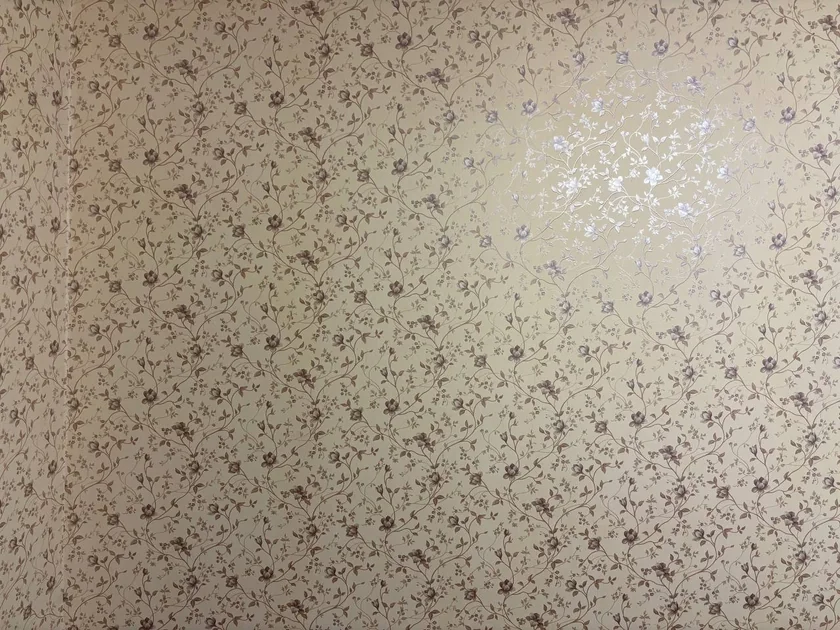
A vertical repeat measures how far down you go before an identical motif appears again. Match type tells you how that motif lines up across seams. Look for both on the product page or wrapper. A label can list a repeat measurement plus a separate offset. Both affect where you can start cutting.
Random match. Adjacent strips can meet without shifting one up or down to align a motif. Cut for wall height and trim. Check the hanging directions for orientation. Some products call for flipping every other strip end for end even when there’s no pattern to line up.
Straight match. Neighboring motifs line up at the same height, like a row of flowers that continues across a seam. With equal-length cuts, each piece starts at an identical point in the print. If you need 98 in including trim and the repeat is 24 in, four repeats give you only 96 in. Five repeats give you a 120 in cut and align the start of the next piece.
Drop match. The design shifts vertically from strip to strip so it lines up across each seam. A half-drop with a 24 in repeat shifts by 12 in between neighbors. In that example, strips one and three start at one point in the motif, while strips two and four start at another. Check your manufacturer’s directions for offset, cut sequence, and where to start on a fresh roll. Lay out your first few pieces dry and number them in hanging order. Your yield depends on that sequence and how much paper you skip to reach each starting point.
How Many Rolls of Wallpaper Do I Need?
Say your wall is 12 ft wide by 8 ft high with no openings. Both products are 20.5 in wide and come on 33 ft continuous rolls. Allow 2 in total for top and bottom trimming in this example. Use your own product’s specified allowance.
Convert the wall dimensions to 144 in wide by 96 in high. Each roll is 396 in long. Dividing 144 by 20.5 gives about 7.02, so plan on eight strips. Seven would cover 143.5 in. You can avoid a half-inch sliver at one end by shifting the first seam. With six full widths between them, the two edge pieces would each cover 10.5 in. Budget one cut per position.
| Match type | Cut length | Complete strips per roll | Strips needed | Rolls to order |
|---|---|---|---|---|
| Random match | 98 in | 4 | 8 | 2 |
| Straight match, 24 in repeat | 120 in | 3 | 8 | 3 |
With random match, add 2 in to your 96 in height. Four 98 in strips use 392 in, leaving 4 in on each roll. Eight divided by four is two, so two rolls give you exactly eight usable lengths.
With straight match, round 98 ÷ 24 up to five repeats and multiply by 24 for a 120 in cut. Assume every roll starts at the right point in the design for this layout, so you can make your first cut without skipping any material. Three pieces use 360 in and leave 36 in. Eight divided by three is about 2.67, so order three rolls. Both estimates cover 96 sq ft of wall, and each uncut roll has about 56.4 sq ft of paper. Dividing by that area alone would suggest two for either design.
Use our wallpaper calculator to estimate strips and rolls from your wall and product dimensions. For straight match, check the trim and starting allowances before comparing results with your hand count. The calculator reserves one full repeat at the start of each roll by default. Set that reserve to zero only if you’ve confirmed each roll starts at the point your layout needs.
What to Check Before You Buy
- Confirm size and selling unit. Check usable width and continuous length on your specific item. If you see single roll or double roll, ask what ships when you add one unit to your cart. A double roll can be one continuous bolt priced in single-roll increments. Calculate what you can cut from each physical length, then order enough packages to cover your project.
- Check dye lot or batch number. Ask for one lot across your order and compare labels before cutting. Two batches of one design can look slightly different side by side. Photograph a label for your project notes if you may need to reorder.
- Read return terms for unopened rolls. Check how many days you have, whether there’s a restocking fee, and whether the item is eligible. If you’re buying a spare and might return it, keep it sealed until you know you need it.
An extra roll can make sense if your layout uses nearly every full-height cut, the design needs careful placement above a focal point, or you’re counting on several offcuts around openings. For future repairs, keep enough length to replace a damaged strip, with room to match the print. If your order leaves only short scraps or you doubt the batch will be available later, weigh what you’d pay for a spare against that risk and the seller’s return terms.
If you’re planning paint, flooring, or other work in the same room, BuildCostKit has calculators for those materials, too.